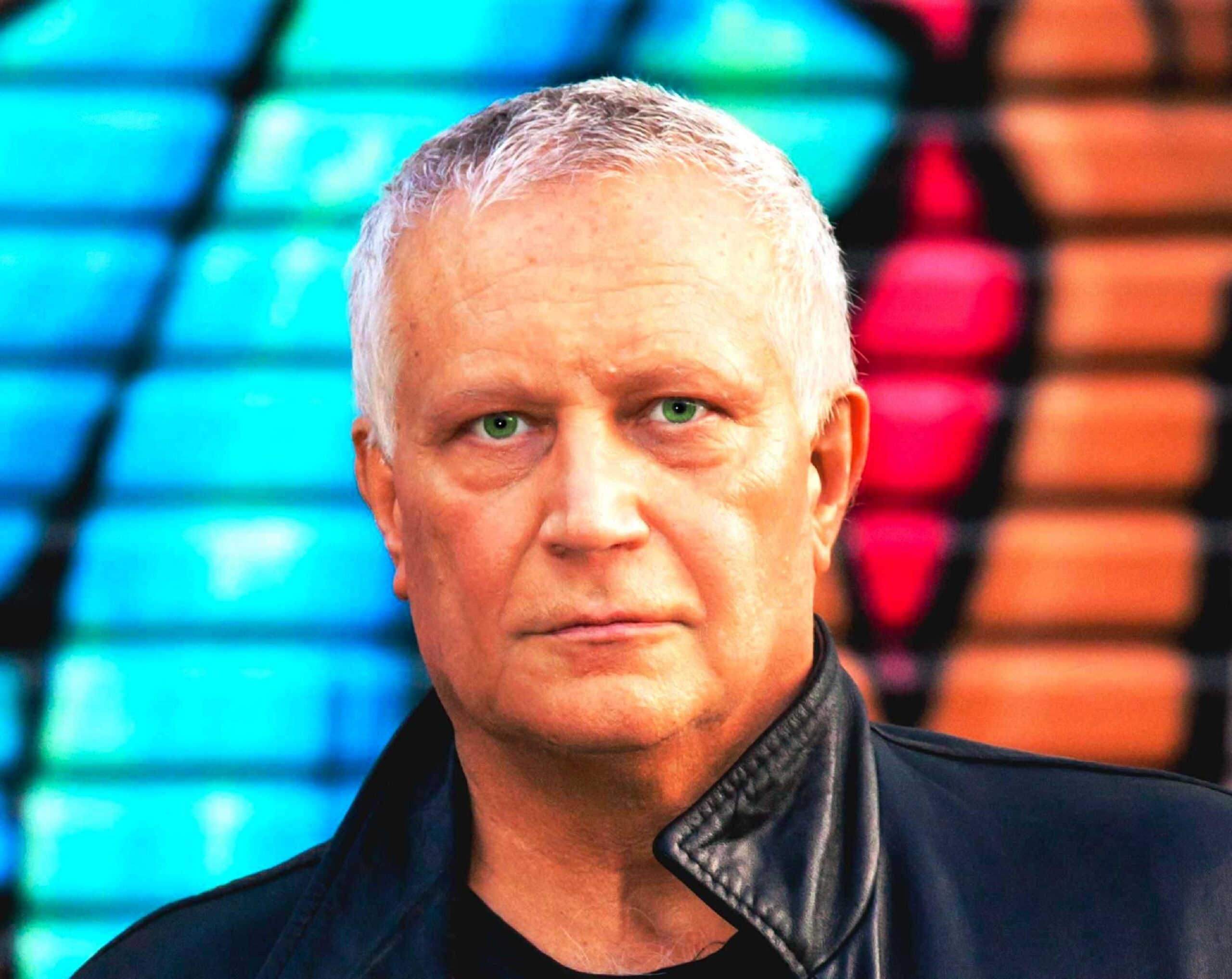
 From the streets of Calcutta to the heart of Melbourne: The Unstoppable Rhett May
In a world where commercialism and pretence threaten the authenticity of music, Rhett May emerges as a defiant force, unyielding in his pursuit of real unfiltered Rock and Blues.
Breaking free from the constraints of mainstream conformity, Rhett’s raw, hard-hitting approach is a breath of fresh air, shaking the foundations of the music industry and it’s cookie-cutter approach.
Raised on the gritty streets of Calcutta and in an orphanage at the foothills of the Himalayas, Rhett May’s life has been a battlefield of struggles and triumphs.
Born into a world of chaos and uncertainty, he found solace in legendary artists like the Beatles, Jimi Hendrix, The Rolling Stones and Led Zeppelin, honing his craft as a vocalist and songwriter, developing a style uniquely his own from his early days, singing in bands like the Flintstones, Shakespeare Sarani, Prodigy and the trailblazing Lucifer, Rhett’s musical evolution has been a testament to his tenacity and raw talent.
Venturing beyond his homeland Calcutta India to the metropolis that is Melbourne, Australia, and standing tall as a solo artist, his work is a revelation of his raw emotions and untamed spirit.
His songs are cathartic journeys, each note becomes a brushstroke on the canvas of his life, painting a vivid picture of a man who refuses to be silenced.
With a voice that effortlessly transitions from velvet-smooth to raspy and impassioned, Rhett’s voice carries the weight of a thousand battles, each word dripping with a poignant sense of truth.
He doesn’t sing to impress…he sings to connect.
Rhett’s songwriting prowess is equally impressive, as he weaves compelling narratives and thought-provoking themes into his songs. His lyrics delve deep into the human experience, a reflection of his journey through heartache, resilience, and personal growth, where he offers a glimpse of his relentless pursuit of artistic freedom.
In a world of manufactured sounds and plastic personas…and where superficiality reigns, Rhett May’s songs stand as a warrior for truth and musical purity…he challenges the status quo with every riff and lyric, oozing with unfiltered emotions and passion, reminding us that music has the power to heal, to inspire and to ignite revolution.
He doesn’t shy away from the dark corners of humanity and through his music, calls out society’s norms, daring listeners to break free from the chains of conformity and embrace their true values….STAND UP… BE YOURSELF!!
Rhett May’s discography is a testament to his fearless and artistic integrity.
From rebellious anthems that spit in the face of authority, to soul-stirring ballads that tug at your heartstrings. His music transcends genre, time and generations, capturing the hearts of seasoned rock enthusiasts, resonating with a new generation of audience…hungry for authentic lyrics and evocative melodies…and touching the souls of all who dare to listen.
Through every chord and verse, Rhett invites listeners into his world, a world shaped by the vibrant streets of Calcutta and the diverse tapestry of Melbourne Australia.
As the battle-scarred troubadour of Rock and Blues, Rhett May continues to defy the odds, prevailing against all naysayers.
His legacy will endure, not because he conforms, but because he rebels unapologetic… true to himself and with the power of music and lyric…to change the world.
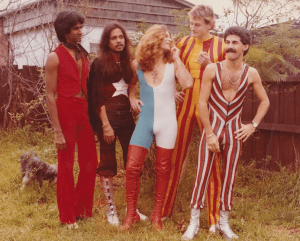
Rhett’s career spans way back to the 1960’s and you can see he has had a blast!
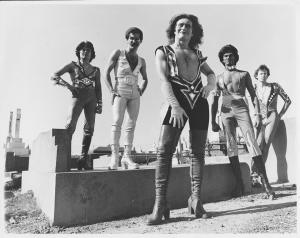
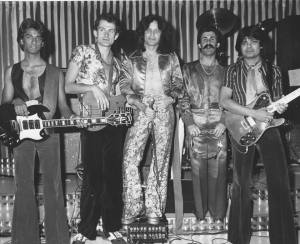
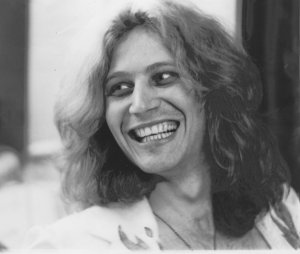
Earlier days
As the 1960s began their luminous fade, Rhett May occupied the epi-center of an improbable musical dawn in Calcutta. Being a member of The Flintstones, the city’s brightest rock band, May and his cohort achieved something rare: a genuine, British-flavored rock sensation that germinated surprisingly far East.
The group’s psychedelic look and sound electrified Indian
nightlife. Their single for His Masters Voice, Happy By My Side / Be Mine, remains a significant piece of history, marking them as a band playing psych rock in 1960s India. Truly fascinating.
Yet, when May left India for Australia in 1969, he stepped from one specific world into another, carrying the same fire that had animated The Flintstones into the untamed expanse of the Australian rock scene.
Out of that energy—and out of countless nights in makeshift rehearsal rooms, garage gatherings, and pubs—came Lucifer, a name that would flicker briefly yet brightly across the live circuits of 1970s Australia.
As May recalls,
It all began in my parents’ garage in 1970, when we called
ourselves Shakespeare Sarani. We’d hire the local town hall, charged a dollar at the door, and my mother would do the catering. It was simple, it was real, and it snowballed into something larger than any of us imagined.”
Those early Saturday-night gigs, equal parts community event and rebellion, seeded what would become one of the hardest-working rock outfits in the country.
The transition from Shakespeare Sarani to Prodigy, and finally to Lucifer in 1973, was more than a change of name. It was, in May’s words, “a change of skin.”
He wanted a heavier sound—music that echoed the grand theatricality of Uriah Heep, the muscle of Deep Purple, and the coolness of the Rolling Stones, all laced with his enduring love for harmonies and melody. “I loved the combination of heavy rock and rich harmonies,” he says.
It was about intensity and connection, about making people feel something real.”
That philosophy soon became the hallmark of Lucifer. The lineup settled around May on vocals, Tom Matthews and Glen Garrett on guitars, Michael Porter (later Paul Gadsby) on bass, and Lino Costanzo on drums. The chemistry was immediate.
“We were doing ten, sometimes thirteen gigs a week,” May recalls, with a mixture of pride and disbelief. “Up and down the West Coast,
every pub, every club, every dancehall. We lived and breathed it.”
Lucifer’s shows roared with heavy rock.
The local Australian circuit embraced that heavier sound that groups like Lucifer were producing at the time. “The energy was phenomenal,” says May.
“We were a very good live band, and we had fun. You could feel it in the room. You could feel the pulse.”
Their reputation grew fast. Lucifer opened for Ray Charles at the Perth Entertainment Centre in 1974, and for Queen at the same venue the following year—a pairing that today seems almost mythical. There was even a chance to open for The Rolling Stones in Perth, but as fate would have it, the band was locked into a contract in Port Hedland. “We couldn’t get released,” says May, still sounding faintly rueful. “It would have been our big moment. But that was the way of things back then.”